Black Pepper
Harvesting and Processing
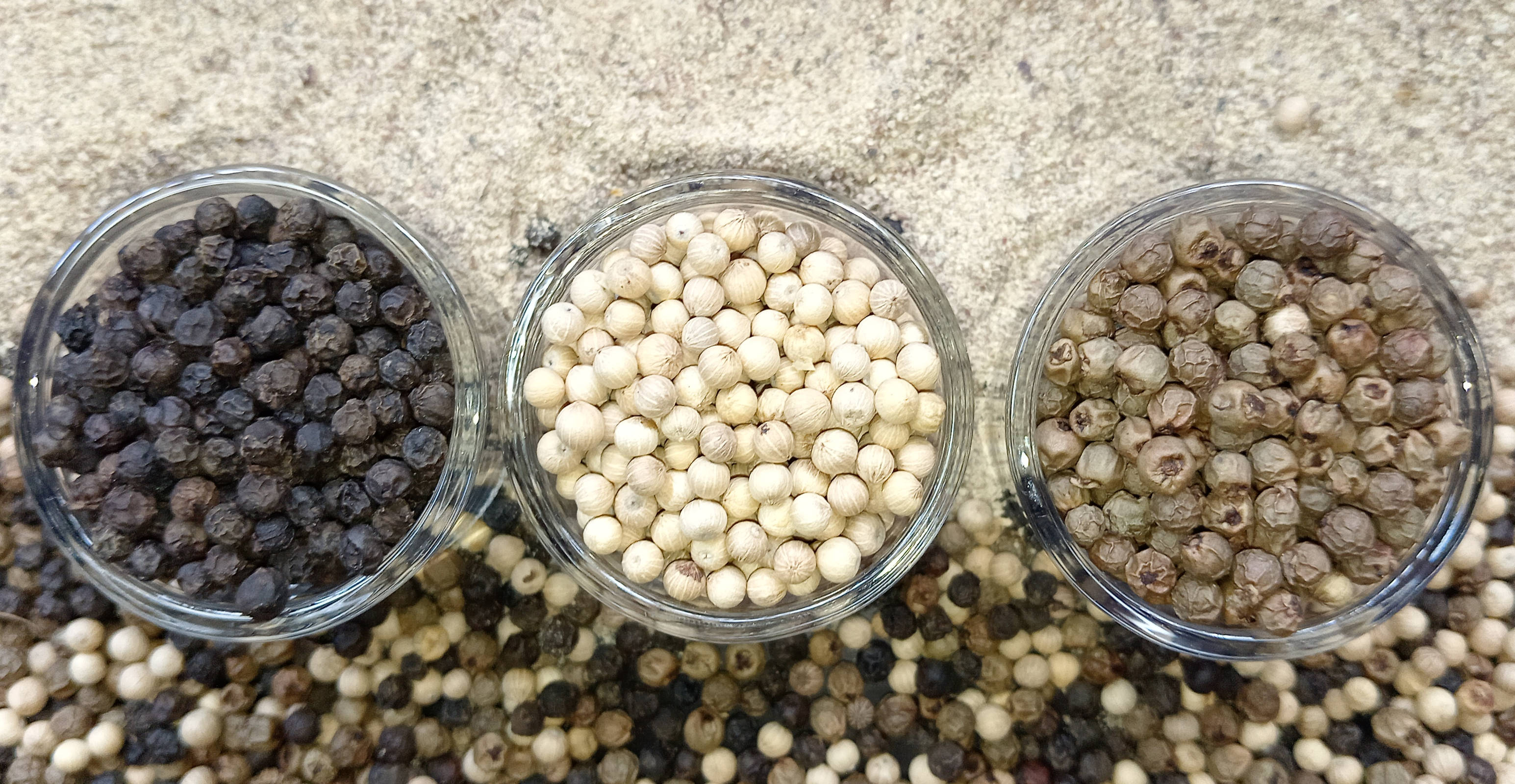
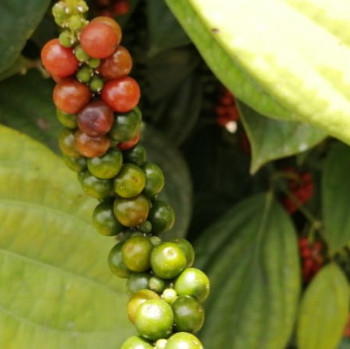
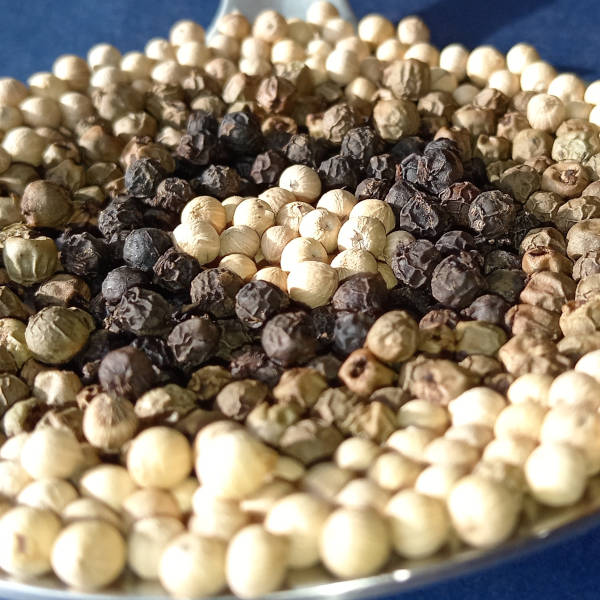
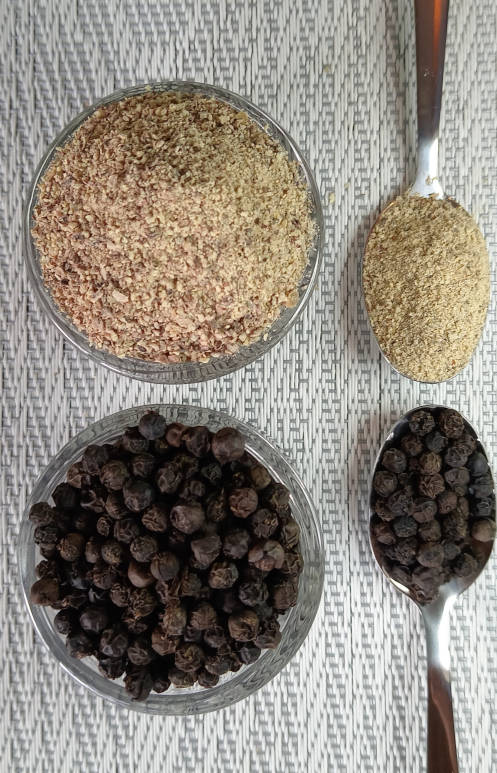
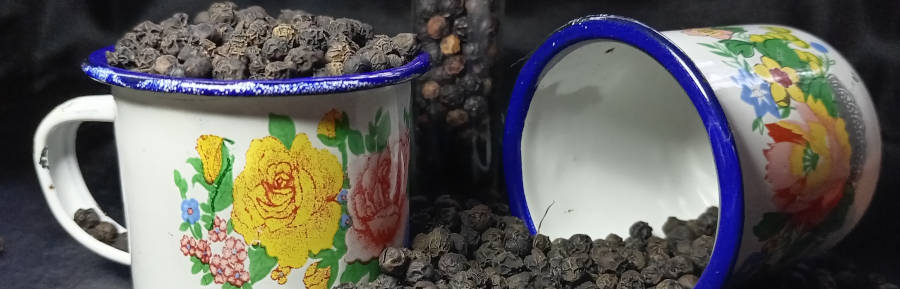
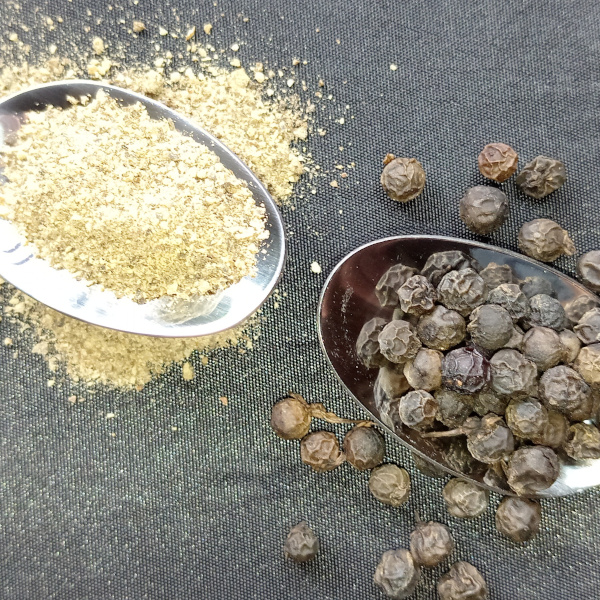
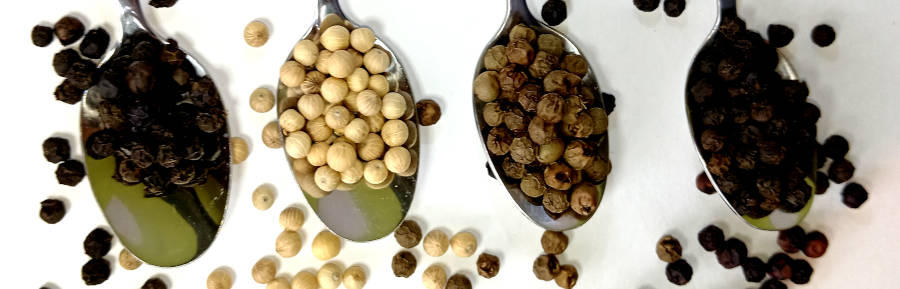
Black pepper is the most widely used and recognized form of this spice. The berries are harvested when they are fully mature but still green. These green berries undergo a drying process that darkens and shrivels them, resulting in the formation of characteristic black peppercorns.
Black Pepper
Flavor and Aroma
Black pepper is renowned for its robust and pungent flavor. The drying process enhances the concentration of piperine, the compound responsible for the spice in pepper. The flavor is complex, offering both heat and a subtle earthy undertone. Its aroma is aromatic and sharp, contributing to its widespread use in various cuisines.
Culinary Uses
Black pepper is a versatile spice used in a myriad of culinary applications. It is a staple in both savory and sweet dishes, adding depth and heat to marinades, soups, sauces, and desserts.
White Pepper
Harvesting and Processing
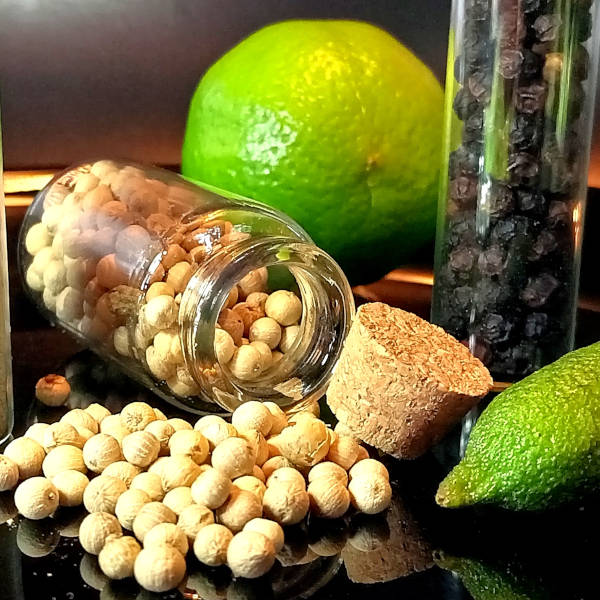
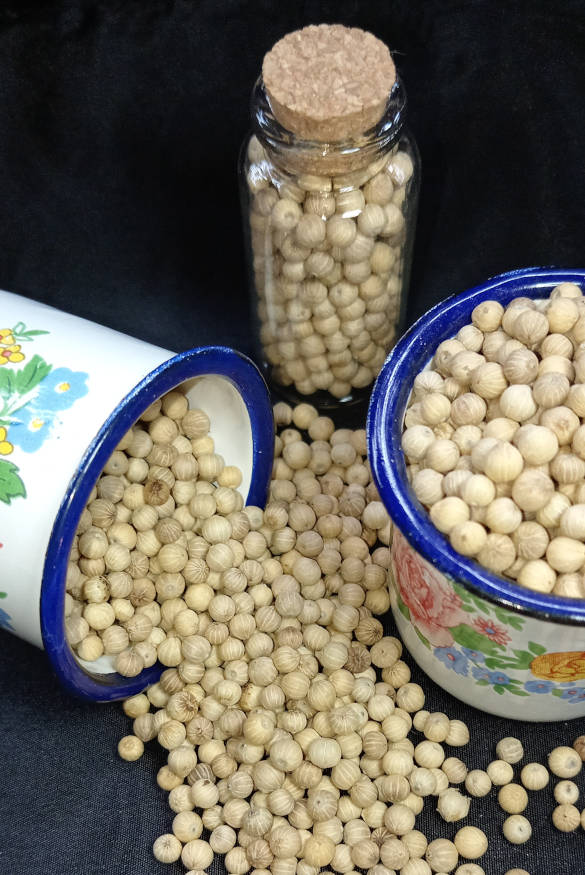
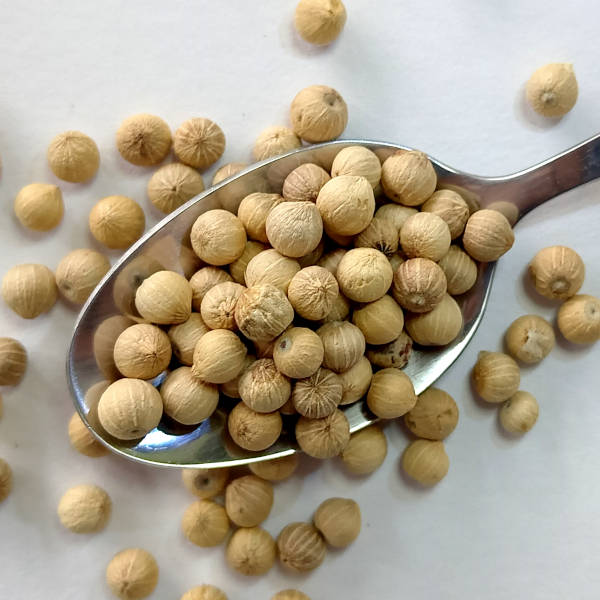
White pepper is derived from the same berries as black pepper, but the processing method sets it apart. Ripe berries are soaked to undergo fermentation, after which the outer layer is removed. The inner seed is then dried, resulting in the production of white peppercorns.
White Pepper
Flavor and Aroma
White pepper has a milder flavor compared to its black counterpart. The removal of the outer layer during processing eliminates some of the compounds responsible for the intense spiciness found in black pepper. White pepper imparts a subtler, fermented taste with less complexity. Its aroma is less assertive, making it suitable for dishes where a milder flavor is desired.
Culinary Uses
White pepper is often preferred in dishes where the appearance of black specks is undesirable, such as in light-colored sauces and creamy dishes. It is also commonly used in European and Asian cuisines.
Red Pepper
Harvesting and Processing
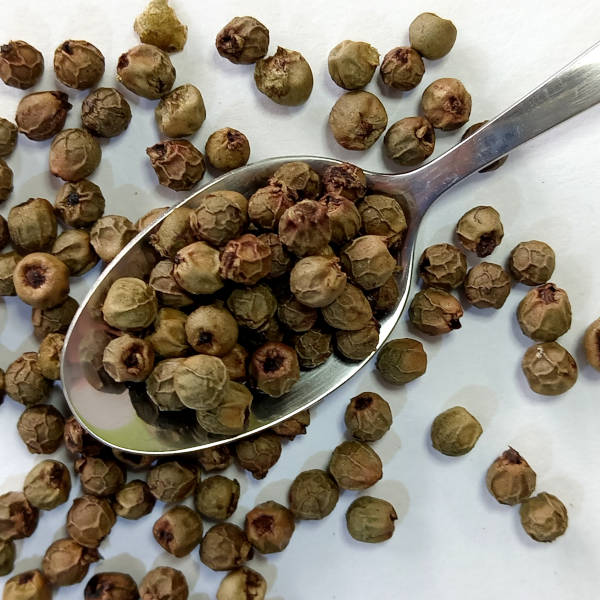
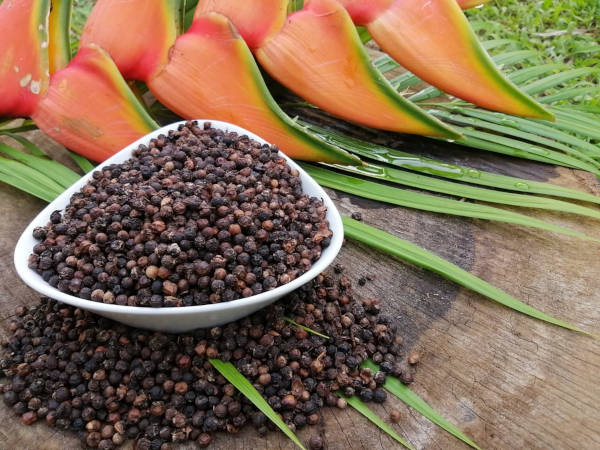
Red pepper, sometimes referred to as pink pepper, are the fully ripened black pepper berries, plucked at a later stage.
Red Pepper
Flavor and Aroma
The flavor of red pepper can vary based on the maturity of the ripened black pepper berries. They often imparts a fruity and slightly sweet taste, with nuanced and mature flavor.
Culinary Uses
Red pepper is used as a unique spice with a flavor profile distinct from traditional black and white peppers. It is often employed in dishes where a hint of sweetness and fruitiness is desired, adding a touch of sophistication to culinary creations.